

Transform Your Business with Powerful Web App Development Services
Have you observed the recent changes in WEBSITE DEVELOPMENT? Ten years ago, the idea of a website meant putting your company brochure online. Today, businesses are creating full products that exist in the browser. This is not just a matter of aesthetics. It is a matter of meeting people in their own universe of use, and giving them tools that work on any device. Instead of spending a fortune to develop separate mobile apps, web app development services deliver responsive, interactive experiences through the browser. Modern web apps run on remote servers and can be accessed from any device without installation, turning your website into a living, breathing application.
From Static Pages to Living Applications
What exactly is a web app?
When people talk about web apps, they’re referring to browser-based software that interacts with servers to process data and respond to users in real time. You don’t download anything; you simply open your browser, and the application stored on remote servers does the heavy lifting for you.
Web app development involves designing, building, testing, and deploying apps that handle everything from shopping carts to customer support. In short, web apps enable businesses to move beyond static content and offer interactive experiences at scale.
Why static sites aren’t enough anymore
Early websites were mostly static, built with HTML, CSS, and a bit of JavaScript. They were great for sharing information, but they didn’t let users do much. By contrast, dynamic web apps process user requests on the fly and send tailored responses back to the browser.
Think about your favourite social network or an online dashboard—those are dynamic web apps. E-commerce platforms, customer relationship management (CRM) tools, and analytics dashboards have all become web apps that people access through their browsers. This evolution has opened the door to new business models and user experiences that simply weren’t possible with static pages.
A quick guide to web app types
While there are many variations, most web apps fall into a few broad categories:
- Static pages: These are straightforward informational websites that have limited interaction.
- Dynamic apps: applications that generate content based on user input, e.g., social feeds and dashboards.
- E-commerce platforms: These websites are like a store—i.e., product listings, payments, checkout, and tracking.
- Single-page applications (SPAs): sites that load once and update content dynamically without refreshing; examples include Gmail and Twitter.
- Progressive Web Apps (PWAs): web apps that behave like native mobile apps. They work offline, can be installed on a home screen, and cost far less to build than native apps. Businesses often choose PWAs because they can boost conversions by up to 50% and improve user retention by 180%.
Other categories include social media platforms, analytics dashboards, CRM systems, and internal workflow apps—all of which rely on dynamic interactions to deliver real value.
Why Web Apps Matter for Your Business
If you’re weighing whether to invest in web app development, consider the benefits these applications provide:
- Lower costs and faster delivery. Progressive Web Apps and other modern frameworks cost far less than native mobile apps. Building web apps is typically quicker, allowing you to get new features or products to market faster.
- Simplified updates and maintenance. Because your app lives on the server, your team can roll out updates centrally, and every user gets them instantly. No more asking customers to download a new version just to fix a bug.
- Reach anyone, anywhere. A web app works on any device with a browser. Whether your customers prefer a laptop, tablet, or smartphone, they’ll have the same experience—online or offline—when you build a PWA.
- No downloads required. Users simply open a link. There’s nothing to install, which reduces friction and encourages more people to try your service.
- Better security. Web apps run on dedicated servers with a robust security infrastructure. Combine that with the zero-trust model—where every request is verified, and you’ve got a strong foundation for protecting your data.
All of these factors help businesses reduce costs, accelerate development, and provide better experiences for both customers and employees.
What’s Shaping Web App Development in 2025?
The rise of Progressive Web Apps
PWAs blur the line between websites and mobile apps. They install on a user’s device, send push notifications, and work offline, all while costing a fraction of a native app. Companies see tangible benefits: up to a 50% lift in conversions and a 180% jump in user retention. Security also improves; PWAs show fewer vulnerabilities than traditional native apps. No wonder the PWA market is projected to reach $10.44 billion by 2027.
Voice and conversational interfaces
Talking to your devices is becoming the norm. More than a quarter of people already use voice search on mobile, and the majority of future searches may be voice-based. With 75% of U.S. households expected to own a smart speaker by 2025, optimizing your web app for voice commands and natural language queries will be key for discoverability and ease of use.
AR and VR go mainstream
Augmented and virtual reality aren’t just for gamers. In e-commerce, AR lets shoppers see how a product will look in their home, while VR creates immersive experiences for training and education. Adding AR/VR to web apps can set your brand apart by offering customers an experience they can’t get elsewhere.
Headless CMS and API-first design
Traditional content management systems tie the backend (where content is stored) to the front end (how content appears). Headless CMS decouples the two, allowing developers to deliver content via APIs to any interface. This flexibility makes it easier to scale or switch front-end technologies as your business grows. Designing APIs before writing code—known as API-first development—improves collaboration and reduces long-term costs. It’s telling that more than half of developers spend a large chunk of their time working with APIs.
Serverless and edge computing
With serverless architecture, you pay only for the computing power you use and avoid managing servers. Functions scale automatically with demand, enabling faster launches and simpler operations. Edge computing takes this a step further by processing data closer to users, reducing latency. Analysts predict that by 2025, 75% of enterprise data will be processed at the edge.
Mobile-first and responsive design
People are increasingly browsing from their phones; mobile devices generated more than 62% of global web traffic in late 2024. Half of smartphone users prefer mobile web pages over native apps, and companies adopting mobile-first design see significant sales boosts. Optimizing your web app for mobile ensures you don’t lose out on this growing audience.
Single-page applications (SPAs)
SPAs create a fluid experience by loading a single HTML page and updating content without reloading. Users enjoy faster transitions and a more app-like feel, which is why so many popular services—Facebook, Gmail, Twitter—are SPAs. This model is becoming the standard for applications that need to keep users engaged.
Security and Zero Trust
The cost of cyberattacks is steep: an average of $4.45 million per breach in 2023. Zero Trust Architecture rejects the idea of an inherently “safe” network. It verifies every request, making it harder for attackers to slip in. Artificial intelligence adds another layer of protection by detecting threats and responding faster than humans can.
Personalization and machine learning
Web apps can now adapt to users in real time. Machine learning analyzes user behaviour to recommend products or content they’re likely to enjoy. Services like Netflix thrive because they tailor their offerings to individual preferences. Such personalization drives engagement and sales.
Measuring success: Core Web Vitals and automated testing
To keep users happy, Google’s Core Web Vitals focus on load speed, interactivity, and visual stability. Good scores mean better search rankings and more satisfied customers. Automated testing reduces development time and costs by identifying bugs quickly—up to a 20% reduction in overall development effort. When you automate, your team can focus on innovation instead of repetitive tests.
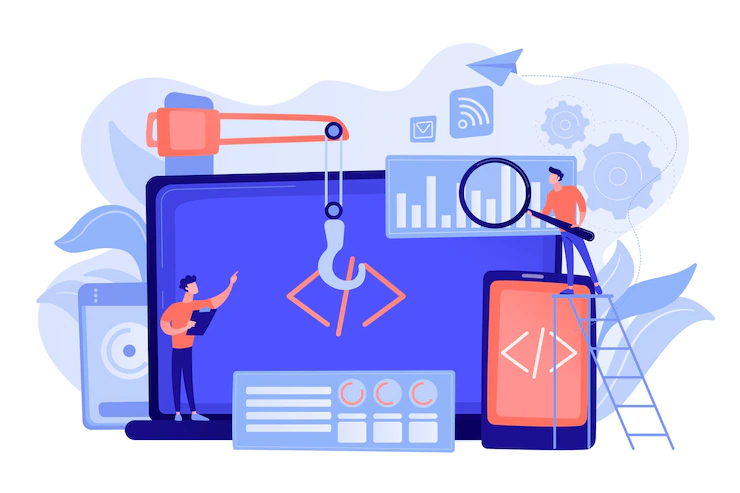
How Web Apps Solve Real Business Problems
Boosting engagement and loyalty
If you’ve ever abandoned a website because it took too long to load, you know how important speed is. SPAs and PWAs load quickly and respond instantly, so users stick around. PWAs, in particular, have been shown to lift conversion rates by as much as 50% and increase retention by 180%. Layer in AI-powered personalization, and you’re not just holding attention, you’re building loyalty.
Streamlining operations and cutting costs
Web apps also make work easier behind the scenes. Dashboards and CRM tools centralize data and improve decision-making, while workflow apps automate repetitive tasks. Serverless and edge architectures lower operational overhead and deliver real-time performance. The result? Your team spends less time on manual processes and more time on high-value work.
Scaling with ease
Growth shouldn’t require re-engineering your entire product. API-first development and headless CMS make it easier to bolt on new features or integrate with other systems. Serverless functions automatically adjust to demand, and edge computing helps your app remain fast no matter how many users you serve.
Keeping data safe
Security isn’t optional. By running your app on secure, dedicated servers and implementing Zero Trust principles, you reduce the risk of breaches. AI-driven tools monitor for suspicious activity and contain threats before they cause harm.
Meeting users wherever they are
Your audience might be on a phone at a coffee shop or on a desktop in the office. Mobile-first design means your app looks and feels right on any device. PWAs even allow users to work offline and sync later. That kind of flexibility builds trust and keeps people coming back.
Choosing a Web App Development Partner
Not all development services are created equal. Keep these factors in mind when choosing a partner:
- Know what you need. Get clear on your app’s purpose and the features you can’t live without. This helps your developers recommend the right technology.
- Check their toolbox. Look for teams experienced with modern frameworks (React, Angular, Vue) and comfortable with serverless, API-first, and headless architectures.
- Prioritize security. Ask how they handle sensitive data, whether they follow Zero Trust principles, and how often they perform security audits.
- Think about tomorrow. Choose a provider who can build systems that scale and integrate with your existing tools through APIs.
- Watch the clock and the budget. Low-code and rapid development platforms can get you to market faster. For example, low-code tools are designed to speed up development.
- Ask about support. Ongoing maintenance and user support will determine whether your app continues to deliver value over time.
Wrapping up
The evolution from static websites to dynamic web applications has changed what it means to be online. Modern web app development services help businesses cut costs, engage users, and solve complex problems. By adopting innovations like PWAs, voice interfaces, AR/VR, headless CMS, serverless computing, responsive design, and AI-driven personalization, you can offer experiences that keep users coming back. In a world where technology moves quickly, investing in dynamic WEBSITE DEVELOPMENT isn’t just a nice-to-have; it’s the key to staying competitive.\
Build the Web App Your Business Demands
Let the team at Noah Design Studio transform your vision into a powerful, user-centric web application. We combine strategic design with robust development to deliver a seamless digital product that scales with your success.
Author Bio
Aminah Rafaqat is a technical writer and researcher with an MS in English Language and Literature. She specializes in transforming complex concepts into clear, engaging narratives across various domains, including SEO, fintech, SaaS, and e-commerce. Her expertise spans content architecture, UX writing, and documentation for web technologies, ensuring precision and accessibility in every piece. Fern Investbury